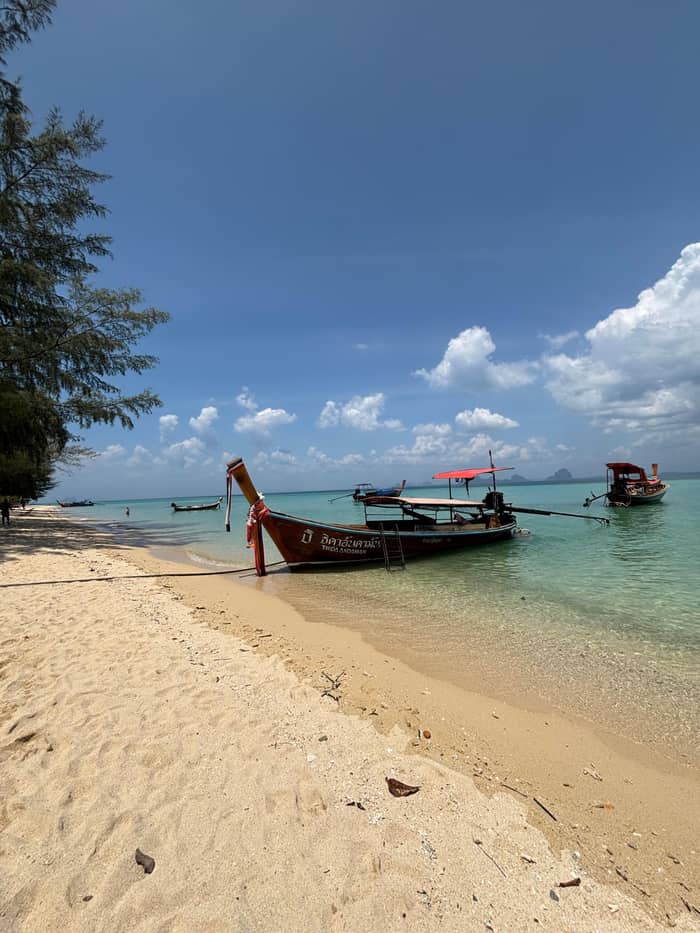
Calm seas
Dry season
November to April
See the toursInteractive to-do list
Checklist · 9 points
Tick each item when it is done. Your place is saved on this device.
0 / 9 ready
You are all set. Only the date and your pickup option are left to choose.
Secure your spotA month-by-month read of rain and heat at the nearest long-term station, the months the parks close islands, how long to stay and what to bring in each season.
Editorial team, kohlanta4islands.click · Updated November 16, 2026 · A 8 min read
Quick look
The cool, dry months from November to April are the ones to aim for when you plan when to go to Koh Lanta. TAT says Phuket, Krabi and the Phi Phi Islands are best visited from November through April, and that great underwater visibility makes December a great time for diving and snorkelling.1 Koh Lanta sits in the same stretch of coast, so the advice carries over, and it matches the park calendar: the park authority opens Ko Rok, Ko Ha and Hin Daeng - Hin Muang from November 16 to May 15.4
The weather record backs it up. At Trang, the long-term station 64.6 km from the island, January collects 10 mm of rain on 1 day with at least 2.5 mm, and February 22 mm on 2 days.2,2 March starts to warm and wet up, with 69 mm and 4 wet days, and April reaches 118 mm on 7 wet days.2,2 The dry months are therefore the stretch from December to March, with April as a hot, showery bridge to the rains.
The dry months still call for planning, since TAT recommends reserving crossings and rooms well ahead for the December and January peak and suggests the weeks at either end of the season for the quietest trip.5 If you want calm seas for the far snorkeling trips and the Emerald Cave swim, the heart of the dry season is the safest choice, and the planning cost is a bit more money and an earlier booking.
Season by season
| Season | Months | What the sources say |
|---|---|---|
| Dry and hot | December to March | Driest at Trang, and the Rok park season is open2,4 |
| Hot and showery | April | 118 mm on 7 wet days at Trang2 |
| Monsoon | May to October | TAT dates the southwest monsoon in these months3 |
| Park closures | June to September | Island areas close, with dates by year11,12 |
| Shoulder | October and November | Rain and sea can still hold boats back8 |
| Busiest | December and January | Book ferries and rooms early5 |
Seasons from TAT and the park authority; monthly figures from the NOAA record at Trang.1,3,2
The numbers below come from the NOAA station at Trang, 64.6 km from Koh Lanta, covering temperatures and rainfall in each of the 12 months, averaged over 1991 to 2020.2 The island's own rainfall is not identical, and the national park authority says annual rainfall near the park exceeds 2,100 millimeters, falling mainly in the southwest monsoon.9 Treat the station as an outline of the year and not as a forecast for any one beach.
Temperatures hardly change across the year. The average daily high is 32.7 °C in January and peaks at 35.3 °C in March and April, then eases to 32.5 °C in August and 31.3 °C in December.2,2,2,2,2 The average daily low stays between 22 and 23.5 °C all year,2,2 which is why a monsoon week is wet rather than cold, and a swim feels warm in every month. The park authority says the highest monthly mean at its weather station is in March and the lowest in December.10
Rainfall is what changes. May brings 212 mm on 13 wet days, June 229 mm on 12, July 270 mm on 14, August 350 mm on 15, September 309 mm on 17 and October 284 mm on 16 wet days.2,2,2,2,2,2 November is still wet at 238 mm on 12 days, and December eases to 159 mm on 9 wet days.2,2 The chart above draws every month, so use it to compare the edge months of your own dates, and read the wet-day count as well as the millimeters, because a month with fewer wet days has shorter and more predictable showers.
Month by month
Mid-month hours of no sun and days of 2.5 mm precipitation or more, as recorded by NOAA station Trang (temperatures and rainfall for all 12 months) over 1991 to 2020.2
TAT describes the southwest monsoon season as stretching from May to October.3 A monsoon day on Koh Lanta is seldom grey from dawn to dusk, because TAT describes the rain as not continuous, usually arriving for 1-2 hours of an afternoon or early evening, although it can be prolonged.7 That makes the monsoon a workable season for travelers who value empty beaches and lower prices and who can wait for the sun between showers.
The sea is the constraint. Island-hopping and other tour boat trips still run in this season, TAT says, yet they can be called off or pushed back at the last minute when the weather is unfavourable or dangerous, and the decision generally belongs to the boat operator.13,15 The park authority is blunter about Mu Ko Lanta National Park, saying that a trip to it during the southwest monsoon is not safe for visitors.9 When a red flag flies on the beach, stay out of the water.16
Island closures follow the weather. The park authority's 2024 list closes Hat Chao Mai's Ko Muk, Ko Kha Dan, Ko Cheuk and Ko Wan from 1 June to 30 September and the Emerald Cave for 1 to 30 September.11 TAT's 2023 list closes Ko Rok and its neighbours from 1 July to 30 September.12 Jellyfish are the other seasonal factor: TAT says box jellyfish are more commonly seen in the monsoon months and lists Ko Lanta among the parts of Krabi with occasional sightings.17,18
Pick your months
Pick your priority to see the months that fit.
If I want the Rok and Haa trip
Mid-November to mid-May
The park authority opens the season from November 16 to May 15.4
If I want the driest weeks
January and February
If I want quiet beaches and low prices
The monsoon months
TAT dates the monsoon from May to October.3
If I want the Emerald Cave
Any month except September
Some listings shut the cave for September.11
If I hate heat
December to January
The daily high is 31.3 °C in December.2
Three seasons
Calm seas
November to April
See the tours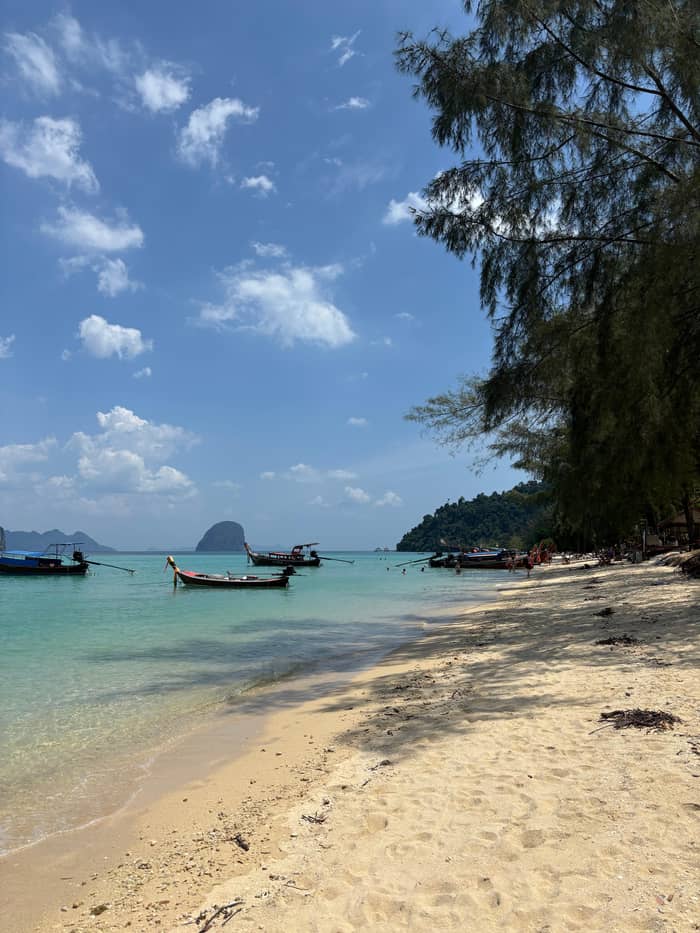
Wet, quiet
May to October
See the tours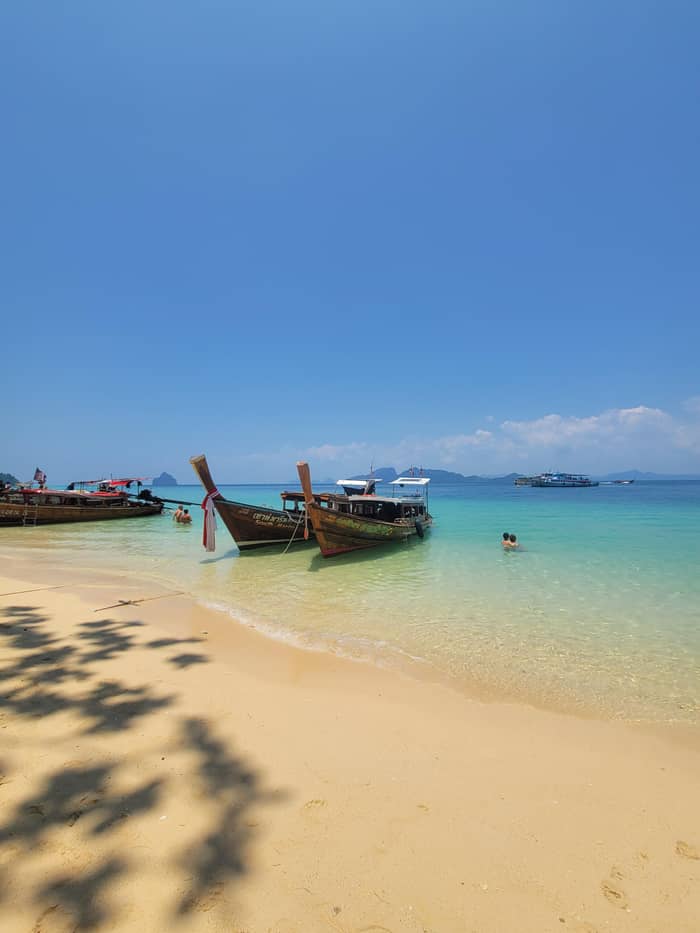
Flexible
October and early November
See the toursThe shoulder weeks are tricky and rewarding. TAT's October feature warns that rain can persist through October and early November and that operators may leave boats at the pier when the swell is high, which is why it advises a spare day in the plan.8 At Trang, October still collects 284 mm on 16 wet days and November 238 mm on 12.2,2 December is when the rain steps down to 159 mm on 9 wet days.2
The calendar of the parks helps you time it. By December TAT expects the dry season proper to have arrived.6 The far snorkeling trip sells days only between 15 October and 15 May, the park authority opens its tourist season on November 16,4 and one speedboat listing puts a shutdown of Koh Rok and Koh Ha between 21 October and 30 November. When sources disagree, the later date is the safer one if the Rok and Haa trip is the point of your visit.
On the sea side, marine national parks add paperwork at the edges of the season. TAT says six marine national parks, Ko Lanta among them, have used electronic tickets since October 2025, so buy yours in advance and have your passport ready.14 TAT says Maya Bay reopened on 1 October.20 If your dates sit in October or November, keep your plans flexible and your bookings changeable, and choose operators whose cancellation terms you have read. That is also the way to decide how long to stay in Koh Lanta when the weather is mixed.
Cost the season
Enter how many are traveling to see the total for each day.
Side-by-side: 4 options
Enter how many are traveling to see the total for each day.
≈
View≈
View≈
View≈
ViewConverted at the ECB reference rate, from-prices as listed by GetYourGuide. The precise amount is shown when you book.
The year in order
Early season
TAT looks for the dry season proper in December.6
Peak dry
Hot edge
Park change
The park authority closes Ko Rok and Ko Ha from May 16.4
Monsoon
Rain typically lasts 1-2 hours of the afternoon.7
Shoulder
Early November can still be wet, as can October.8
Forecasts only go so far, and the sea has the last word. TAT explains the beach flags this way: red means do not swim, yellow allows swimming with medium risk and green means calm conditions.16,21 Ask the lifeguards or your hotel staff what the flag means on the beach you are using, and do not treat a clear morning as proof of a calm afternoon on open water, as winds can build across the Andaman.
Boat captains decide whether a trip leaves. TAT says a called-off trip is for the safety of the passengers and crew,15 and the sensible response is to accept the decision and reschedule rather than to push for a sailing, since the captain sees the swell and the wind that you cannot see from the pier. Read the exact wording of your option, since the site tour says the trip still runs in rain if conditions are safe, with no refund.
Keep the numbers for emergencies in your phone. TAT lists the Marine Department helpline as 1111 and the Tourist Police hotline as 1155, both open 24 hours, and gives 1669 as the national emergency line.22,23 Keep a life jacket on aboard every boat, skip swimming after heavy rain or beyond the buoyed safety zones, and enjoy the island knowing the bad days are the exception.24,25
Video
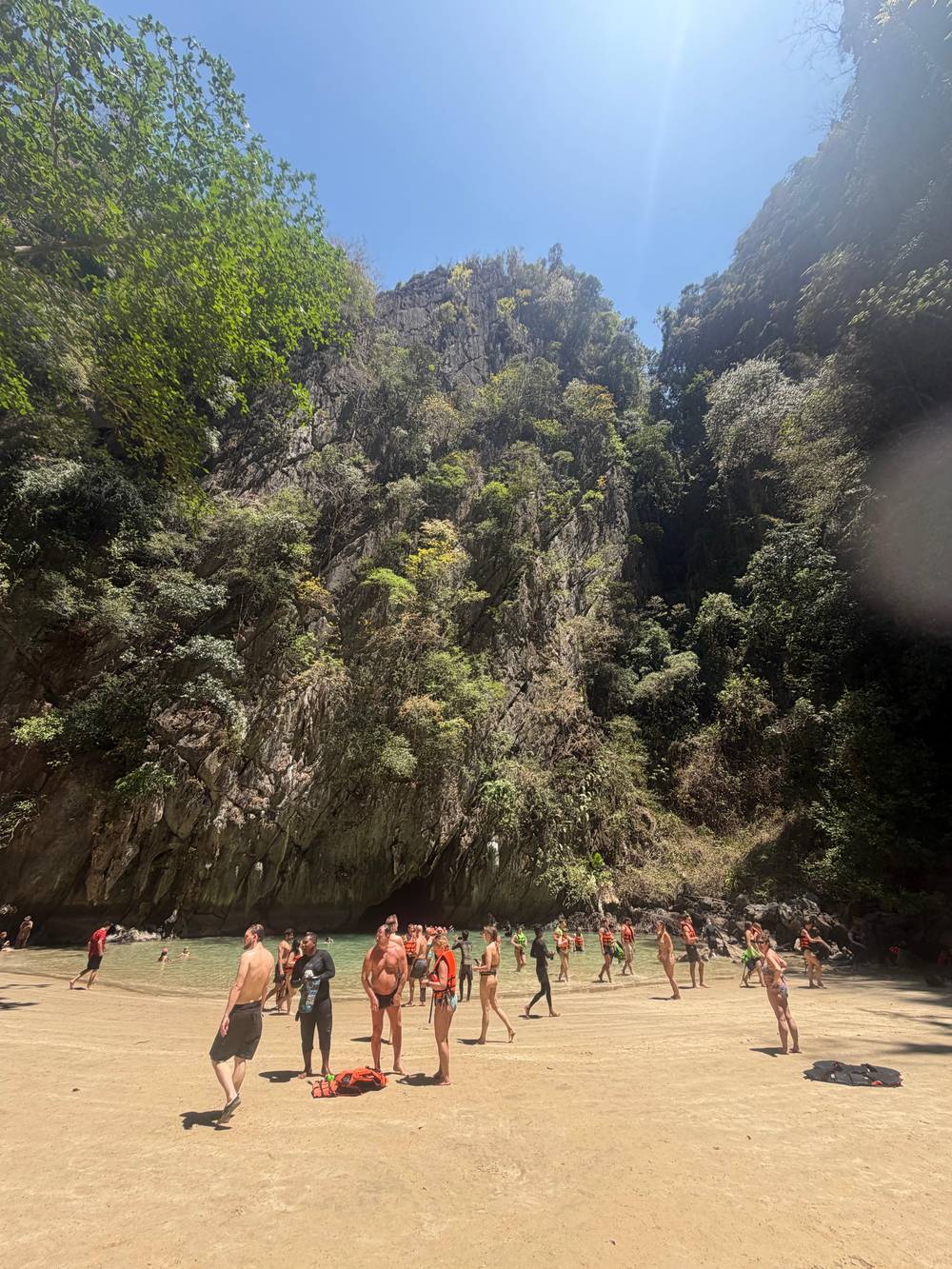
Jumping Places on YouTube · Playback files load only once you tap play.
October and early November can still bring rain, and boat operators sometimes hold back when the waves run high.
How many days in Koh Lanta depends on how many sea days you want and what the weather allows. The site's longtail day takes 7 to 8 hours, the Rok and Haa day 7.5 hours and a mangrove kayak half day 3 hours. A long weekend fits a sea day and a couple of land outings, while a week adds the far snorkeling trip, a day for the old town and the beaches, and a spare day for a rough sea.8
If you are asking about the length of a dry-season stay, plan around the Emerald Cave and the far reefs, since the sea decides those. In the monsoon, shorten the sea plans and lengthen the land ones: the mangroves, the cooking class and the old town work in showers. Whichever season you choose, keep one flexible day, because boat days are the ones that move, and ask the operator whether a postponed trip can be moved to the next day at no cost.
Pack for water and heat. Hat, sunscreen and a dry bag are worth having in every season, and the Rok listing asks for reef-safe sunscreen. In the monsoon months add a rain shell and a rash guard or long swimwear against jellyfish.19 Wear the life jacket on every boat.24 After a jellyfish sting, rinse the area with vinegar for at least 30 seconds and call the national emergency line 1669.26 Keep a small first-aid kit with plasters and antiseptic in the day bag, and a spare shirt, because the boat can be wet even when the sky is clear.
FAQ
The Trang station records 350 mm and 15 wet days.2
A typical wet-season day brings rain for 1-2 hours late in the day, according to TAT.7
TAT says to book ferries and island accommodation early.5
Sources
Further reading
Heading to Koh Lanta? Ask a real person here.